

Kawaii graffiti - Meet SHEA
Osaka’s streets may hum with the steady rhythm of city life, but every so often, a burst of pink, a rounded line, and a soft pair of eyes peek out from concrete corners. That’s She-chan — the signature character of SHEA, a graffiti writer whose work is equal parts tender and defiant.
Who is she? Meet SHEA from Japan!
Her journey began without a label. “At first, I didn’t even know what I was doing was called graffiti,” she recalls. Yet, she feels the quiet sadness of modern Japan’s streets. “The city feels a little lonely,” she admits. Her graffiti, then, becomes a form of resistance — or perhaps, a gentle invitation.
“I’m a graffiti writer, and I mainly draw a character called She-chan. As a woman, I rearranged the letters of ‘a she’ to create SHEA — a name that also holds the meaning of sheone.” Her character She-chan with hair shaped like the “SHE” overflowing itself, has since multiplied across Japan’s backstreets, construction barriers, and crumbling walls.
“I want to make opportunities for people to do what they want, more freely. It’s more fun when we all cause each other a little bit of trouble.”
That kind of communication,
through the city itself,
is beautiful.
— SHEA
Since the 1970s–80s, kawaii (かわいい) has become a major cultural phenomenon in Japan. It’s the idea that softness, fragility, innocence, and kindness can be forms of strength. An object, a person, or even an attitude can be kawaii.
Kawaii Graffiti?
SHEA’s graffiti world isn’t all sharp edges or angular lettering of traditional tags. It’s soft, round, and irresistibly kawaii. SHEA’s world has its dangers, too — ghosts in abandoned buildings, bees in summer ruins, and the ever-present hum of risk.
Still, her kawaii is not all sugar and sparkle. “It’s true my drawings are cute,” she says, “but I want to show not just the cuteness, but the joy of expressing yourself — with your whole body, whether in drawings or letters.”
“I get nervous every time I paint a wall. I’m a bit of a scaredy-cat, but I couldn’t draw those tough, wild letters like everyone else. So instead, I started drawing characters and when I’m painting, I can’t stop. It’s too much fun. ”
Her art also carries quiet symbolism. “She-chan loves She-chan”
— SHEA
Joy, sadness, curiosity
Her wish is simple yet radical: that her graffiti invites thought. “Sometimes I draw with a message in mind,” she says, “but I want people to think for themselves. I also love the meaningless meaning of graffiti — when something is just cute or funny for no reason at all. That’s beautiful.”
💌 Her art also carries quiet symbolism. “She-chan loves She-chan,” she says simply. “I want to erase homophobia and I draw while wishing for happiness. SHE can also mean death in Japanese — ‘shi’. I used to avoid that theme, but recently, touching it changed how I feel deeply.”
Joy, sadness, curiosity — everything becomes inspiration for SHEA. “Even news, even small emotions,” she says.
I feel happy when I notice small changes in the city or traces left by people. That kind of communication — through the city itself — is beautiful.
— SHEA
Free your mind.
One of her most touching memories still lingers. “Once, I went back to an empty lot during the day to photograph a piece I’d done. An old man with a cane stood there, staring at it for a long time. He didn’t know it was illegal — he was just looking. Purely. That made me so happy.”
If you ever find She-chan smiling from a concrete wall in a quiet alley, maybe that’s the message: a reminder that even softness can be punchi and that kawaii, too, can be graffiti.
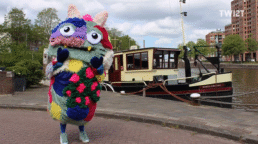
This “cute” aesthetic is not new, however. It can be found everywhere. This trend has its roots in kawaii culture. Twist gives the floor to Annkathrin Kohout, a cultural studies scholar who examines this fascination. Does it reflect a search for comfort in a world plagued by wars, crises, and climate change?

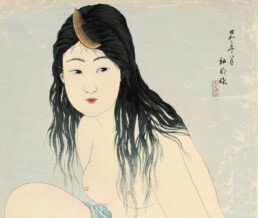
Printed art form dates back to the very beginnings of humankind
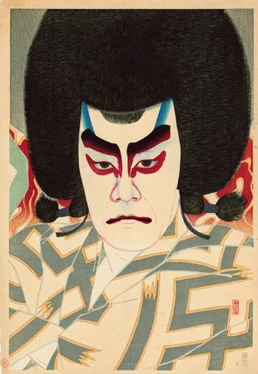
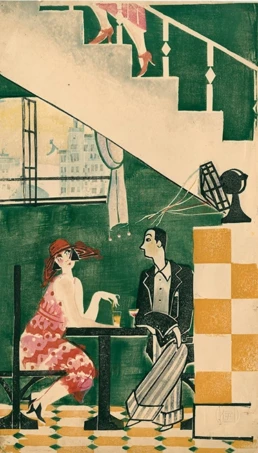
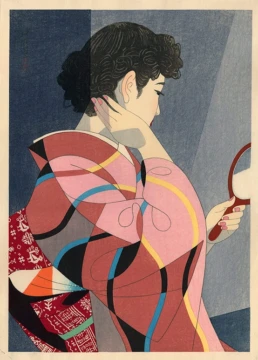
Japanese Prints: Shin-hanga and Sosaku-hanga
If printmaking had the ability to express itself, it would be an open book, sharing its stories for hours on end, for this art form dates back to the very beginnings of humankind. The diversity and vitality of printmaking can be seen in its constantly renewed aesthetic. In Japan after ukiyo-e, came shin-hanga and sosaku-hanga.
Learn more: Japanese Prints : New Wave
| Article published a few years ago on BeauxArts magazine